


Kazakhstan: Trump to Host US-Central Asia Summit on November 6
- Times Tengri
- Oct 27, 2025
- 5 min read

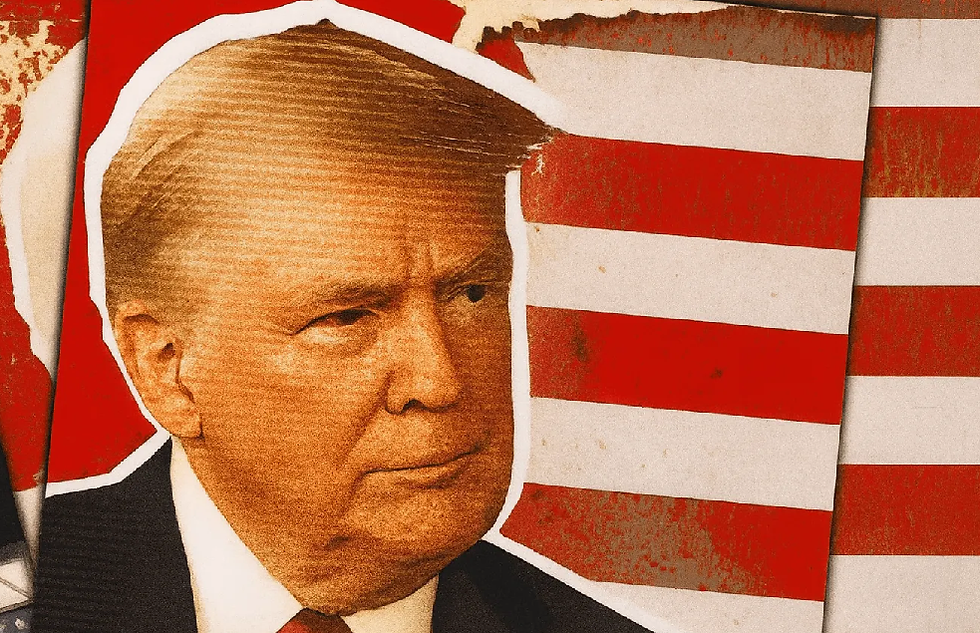
A landmark diplomatic event is about to take place in Washington, D.C. According to an official announcement from the Kazakh Presidential Administration, a "Central Asia-US" summit has been scheduled for November 6. The summit was initiated by US President Donald Trump, and Kazakh President Kassym-Jomart Tokayev has formally accepted the invitation. In a statement on October 26, the Tokayev Presidential Press Office stated that the president considers the initiative "timely and important" and "shares the key principles of President Trump's domestic and foreign policies, particularly his advocacy of common-sense, traditional values and his commitment to peace and security." The summit not only marks the tenth anniversary of the "C5+1" dialogue mechanism but also signals a new phase in relations between the United States and the five Central Asian countries—Kazakhstan, Kyrgyzstan, Tajikistan, Turkmenistan, and Uzbekistan—against the backdrop of profound changes in the global geopolitical landscape.
I. Summit Background and the Development of the "C5+1" Mechanism
The "C5+1" diplomatic mechanism, established in 2009, aims to provide a platform for multilateral dialogue and cooperation between the United States and the five former Soviet republics in Central Asia. The mechanism complements the United States' bilateral relations with these countries, covering areas such as security, economics, energy, the environment, and democratic governance. Over the past decade, the mechanism has experienced ups and downs, its activity often correlating with shifts in the international landscape and the US government's strategic priorities regarding Central Asia.
The proposal and preparations for this summit are not isolated events, but rather a direct continuation of a series of recent high-level interactions. Last month, during the UN General Assembly, President Trump met separately with President Tokayev and Uzbek President Shavkat Mirziyoyev. These meetings yielded substantial results, with billions of dollars in business deals announced, demonstrating the deepening of bilateral relations from political dialogue to practical cooperation. Meanwhile, recent visits to Kazakhstan and Uzbekistan by US Special Envoy for South and Central Asia Sergio Gore and Deputy Secretary of State Christopher Landau clearly served as preliminary coordination and groundwork for the summit.
Furthermore, calls within the US Congress for deeper ties with Central Asia have provided momentum. In a letter to President Trump on October 20th, a congressional foreign affairs panel explicitly urged hosting a summit with Central Asian leaders before the end of the year, outlining core US interests in the region, including the development of critical mineral resources, the repeal of Cold War-era trade restrictions (such as the Jackson-Vanik Amendment), and enhanced counterterrorism cooperation. This reflects a growing consensus between the US executive and legislative branches on the strategic importance of Central Asia.
II. Core Topics and Strategic Considerations of All Parties
The summit is expected to focus on the following core areas, which clearly outline the key strategic considerations of all parties:
1. Economic Cooperation and Energy Resources: Economic issues will be a top priority of the summit. Central Asia is rich in energy and critical mineral resources. Tungsten, antimony, lithium, and rare earth elements, specifically mentioned in the US congressional letter, are crucial for high-tech industries, military equipment, and clean energy technologies. Reducing dependence on a single supply chain, such as China, and diversifying the supply of critical minerals is in the strategic security interests of the United States. For Central Asian countries, attracting US technology and investment and expanding into the US market are key paths to economic diversification and shedding economic dependence on neighboring powers. The multi-billion dollar commercial agreements announced last month set a good tone for this summit, and more specific cooperation projects are expected to be on the agenda.
2. Regional Security and Counterterrorism: Security cooperation is a traditional pillar of the "C5+1" mechanism. With the gradual withdrawal of US troops from Afghanistan, security uncertainties in Central Asia are increasing, particularly from regional affiliates of extremist groups such as the Islamic State. US-Central Asian cooperation will be further strengthened in areas such as counterterrorism intelligence sharing, border control, and military training. For the United States, maintaining stability in Central Asia and preventing it from becoming a hotbed for terrorism is crucial to its global counterterrorism strategy and the stability of South Asia. For Central Asian governments, cooperation with the United States helps enhance the capabilities of their security forces and address internal and cross-border security challenges.
3. Geopolitical Balance: The timing and implications of this summit bear significant geopolitical weight. President Trump is expected to discuss trade with Chinese President Xi Jinping during his Asia trip. Hosting a summit with Central Asian leaders at this time is seen as a clear signal that the United States aims to strengthen its presence in the region and balance the influence of Russia and China. Russia maintains traditional influence in the region through the Collective Security Treaty Organization and the Eurasian Economic Union, while China has engaged in large-scale economic penetration through the Belt and Road Initiative. Central Asian countries generally pursue a "multi-dimensional" foreign policy, maintaining friendly neighborly relations with Russia and China while actively developing relations with other global power centers, such as the United States, the European Union, and Japan, to gain greater strategic space and diplomatic leeway. This summit provides Central Asian countries with an opportunity to demonstrate their independent diplomatic stance to the international community and seek a more diverse range of international partners. 4. Institutional Reform and Values: The US Congress is urging the complete repeal of the Jackson-Vanik Amendment's trade restrictions on Central Asian countries, demonstrating the US's intention to remove legal obstacles to bilateral trade and economic relations and pave the way for normalization. Although President Tokayev expressed his agreement with Trump's "traditional values," US concerns on issues such as human rights and democratic governance are expected to be reflected in some form during the dialogue. The specific expression and intensity of these concerns will be key to assessing the flexibility of US policy.
III. Challenges and Prospects
Despite the significance of this summit, the development of US-Central Asian relations still faces numerous challenges.
First, there are differences among countries in the region. Kazakhstan and Uzbekistan, as regional powers, have been relatively fast in their reform and opening-up efforts and are more willing to cooperate with the US. The other three countries, due to domestic and foreign policy considerations, may be more cautious about the pace and scope of deepening cooperation with the US. Coordinating the consensus position of the five countries will be a test of US diplomatic acumen.
Second, the reactions of Russia and China will be a key variable. Moscow and Beijing will undoubtedly closely monitor the summit and its outcomes. While Central Asian countries emphasize their "multi-dimensional" diplomacy, over-provoking their powerful neighbors could trigger geopolitical backlash, a balancing act that leaders must carefully consider.
Finally, the sustainability of cooperation is crucial. US foreign policy is subject to shifts due to changes in administration. Whether the consensus reached at the summit can be translated into long-term, stable cooperation projects, and whether the "C5+1" mechanism can avoid a relapse into intermittent activity, will be the key to measuring the summit's true effectiveness.
Conclusion
The US-Central Asia Summit, scheduled for November 6th, marks a culmination of the past decade's development in bilateral relations and a bellwether for future developments. It reflects the growing geoeconomic and geopolitical importance of Central Asia amidst the US's global strategic adjustments. For the Trump administration, it presents an opportunity to demonstrate its focus on the Eurasian heartland beyond its "Indo-Pacific Strategy" and a practical step toward expanding US interests in the economic and security spheres. For Central Asian countries, led by Kazakhstan, it presents a strategic opportunity to enhance their international standing, attract investment, and balance regional power. Despite numerous challenges ahead, the very holding of this summit has sent a clear message to the world: Central Asia, a crucial region at the heart of Eurasia, is playing an increasingly important role in the great power game. The specific outcomes of the summit will profoundly influence the future of international relations in the region and beyond.

Comments