


48 Hours of Geopolitical Storm Hits Central Asia & South Caucasus: Power Shifts, Energy Upheaval and Great Power Rivalry

Over the past 48 hours (April 7–9), Central Asia and the South Caucasus—the heart of Eurasia—have been rocked by a series of major events: Georgia’s former state security chief detained over massive bribery, Armenia announcing its withdrawal from the CSTO and a full tilt toward the West, and China brokering a ceasefire between Afghanistan and Pakistan in Xinjiang. Coming amid US-Iran tensions that have disrupted the Strait of Hormuz and sent global oil prices surging, these three developments have triggered the most profound restructuring of geopolitics and energy flows in the region since the Cold War.
I. Georgia’s “Security Tsar” Detained: Anti-Corruption or Political Purge? Key Hearing on April 22
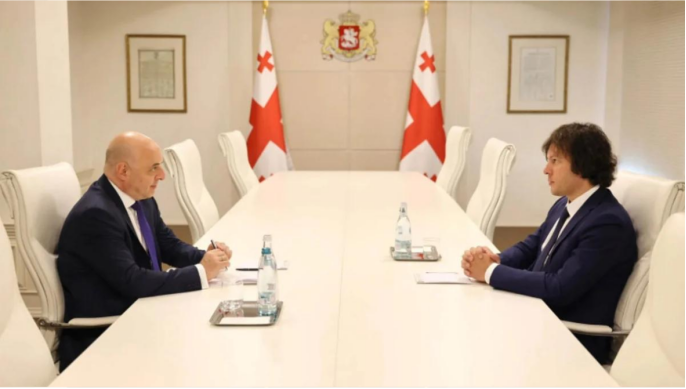
On April 7, Grigol Liluashvili, former head of Georgia’s State Security Service (SSS), was formally detained on suspicion of taking a $1.4 million bribe and providing protection to cross-border fraud networks. A court confirmed a key hearing will take place on April 22. The sudden downfall of this long-standing security chief has sent shockwaves through the South Caucasus.
Investigations indicate his corruption network penetrated core state institutions, involving judicial meddling, administrative favors and illicit financial flows. Over the past year, a string of top officials—including a former prime minister, prosecutor general and energy minister—have been targeted, leading to widespread accusations of selective political purges within the ruling party. Meanwhile, Georgia’s instability threatens the security of the Baku-Tbilisi-Ceyhan oil pipeline and the Southern Gas Corridor. With global energy supplies strained by US-Iran tensions, this vital route for Caspian energy to Europe has become a flashpoint of geopolitical competition.
II. Armenia Breaks Ties with Russia: Putin Loses a Strategic Foothold in the Caucasus
Armenian Prime Minister Nikol Pashinyan officially announced that Armenia will withdraw from the Collective Security Treaty Organization (CSTO) if Putin raises natural gas supply prices.launch full EU accession negotiations, and deepen military and energy cooperation with the United States. This marks a definitive Western turn by Russia’s core ally in the South Caucasus, redrawing the regional map.
Russia’s neutral stance during the 2023 Nagorno-Karabakh conflict already left Armenia deeply disillusioned. Since then, Armenia has accelerated de-Russification and its Western pivot, planning the Zangezur Corridor to bypass Russian-dominated routes. However, the sharp escalation of US-Iran tensions has put at risk Armenia’s energy and transit lifeline through Iran, causing domestic energy shortages and mounting economic pressure. Despite EU statements of support, no substantive alternative exists in the short term.
III. China Mediates Afghanistan-Pakistan Ceasefire in Xinjiang: Securing the Wakhan Corridor and Stabilizing Central Asian Energy
From April 1 to 7, China chaired ceasefire negotiations between Afghanistan and Pakistan in Urumqi, facilitating a temporary truce and border control agreement. This marked the first major regional security mediation led by China on its home soil in Xinjiang, effectively sealing the Wakhan Corridor against militant infiltration and strengthening security for the Belt and Road in Central Asia.
As US-Iran tensions heighten global energy risks and repeatedly disrupt the Strait of Hormuz, overland energy routes through Central Asia have soared in strategic importance. On April 8, Turkmenistan announced accelerated construction of the China-Turkmenistan Line D, which will significantly boost natural gas supplies to China. Central Asia is emerging as one of the most important and stable alternative energy suppliers for China and the world, with China’s influence in regional security and energy architecture continuing to grow.
IV. Shockwaves of US-Iran Conflict: A Complete Remaking of the Energy Order
US-Iran tensions have repeatedly closed the Strait of Hormuz, pushing oil prices above $130 a barrel and drastically altering three critical energy routes:
The Caspian-South Caucasus-Europe corridor has risen to become Europe’s key alternative to Middle Eastern and Russian energy.
Russia’s traditional transit pipelines are in decline; Central Asian states are pursuing multi-vector diplomacy, eroding Russia’s role as an energy middleman.
The Iran-Armenia energy and transit corridor is nearly suspended, leaving Armenia the region’s biggest loser.
V. A New Era at the Heart of the World: Russia in Retreat, West Advancing, China Rising
Over the next 72 hours, Georgia’s court hearing, Armenia’s CSTO withdrawal process and US-Iran negotiations will shape the region’s future. Central Asia and the South Caucasus are no longer dominated by a single power, but entering a new era of great power competition, energy restructuring and multi-polar balancing. The storm that erupted in 48 hours is only the beginning of a historic realignment at the heart of the World Island.


Comments