


Tokayev's Visit to Uzbekistan Propelles Kazakhstan-Uzbekistan Relations into a New Stage of Comprehensive Strategic Cooperation
- Times Tengri
- Nov 17, 2025
- 5 min read

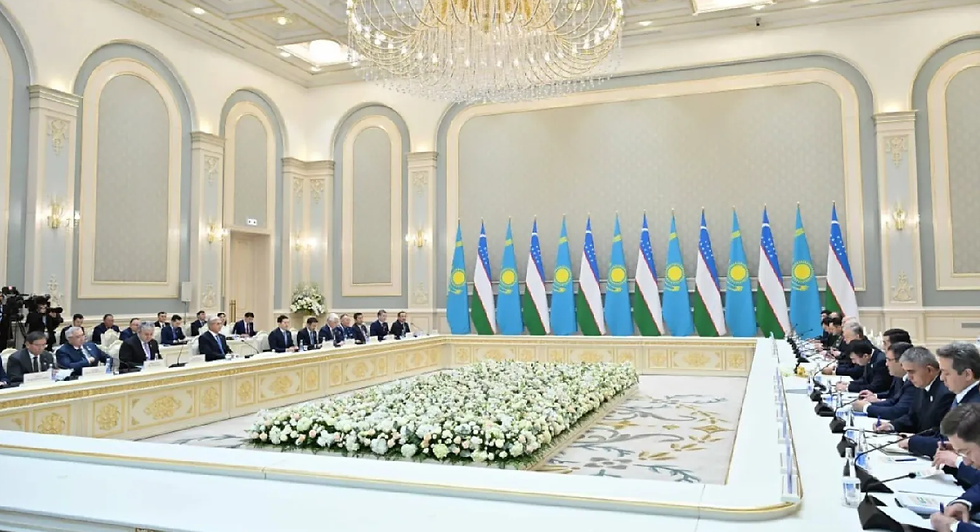
From November 14 to 15, 2025, Kassym-Jomart Tokayev, President of the Republic of Kazakhstan, paid a state visit to Uzbekistan. This visit was significant in its symbolic meaning and substantive breakthroughs, not only elevating bilateral relations to a new level but also providing important practical experience for a new paradigm of regional cooperation in Central Asia. Tokayev became the first foreign head of state to land at the newly built Tashkent Khumo International Airport (Tashkent East Airport), and the grand welcoming ceremony held by Uzbek President Shavkat Mirziyoyev highlighted the special status of the bilateral relationship. During a visit to the new terminal, the two leaders held preliminary exchanges on deepening the Kazakhstan-Uzbekistan strategic partnership and alliance, setting the tone for the formal talks the following day.
I. Emotional Connection and Strategic Positioning: From Special Partner to Reliable Ally
Within the framework of the visit, President Mirziyoyev awarded Tokayev the Order of Supreme Friendship, Uzbekistan's highest national honor. Tokayev stated, "This honor is not only a recognition of his personal achievements but also a profound tribute to the entire Kazakh people. The name of the medal aptly describes the essence of our bilateral relations. The friendship between Kazakhstan and Uzbekistan is our priceless treasure, which we will cherish as we would our own eyes." Mirziyoyev praised Tokayev as a "world-renowned outstanding statesman," noting the remarkable achievements of the "Just Kazakhstan" reforms under his leadership, and expressing his sincere delight at Kazakhstan's development achievements.
On strategic positioning, the two leaders unanimously emphasized that "Kazakhstan and Uzbekistan have never been competitors, but rather strategic partners and reliable allies working hand in hand." Tokayev particularly praised Mirziyoyev's outstanding contributions to shaping Central Asia into a "region of friendly cooperation," calling his leadership a key factor in propelling bilateral relations to an "unprecedented height." This statement marks a shift in bilateral relations from general cooperation to strategic synergy, injecting a powerful boost into Central Asian regional integration.
II. Economic Prosperity: Trade Upgrading, Industrial Synergy, and Logistics Optimization
Economic cooperation has shown three major breakthroughs. First, trade structure transformation and upgrading. Building on the existing annual trade volume exceeding US$4 billion, both sides will systematically increase trade volume through measures such as establishing a new joint venture trading company, UzKazTrade, and expanding non-raw material exports, setting a new target of US$10 billion in trade volume by 2030. Achieving this goal will make Kazakhstan and Uzbekistan among each other's most important trading partners and significantly enhance the resilience of the regional economy.
Second, deepening industrial synergy. 78 industrial projects totaling US$1.7 billion are accelerating their implementation, covering high value-added sectors such as oil and gas chemicals and rare earth metal processing, and are expected to create over 15,000 jobs. The "Central Asia" International Industrial Cooperation Center, spanning the border between the two countries, will become a new hub for the regional industrial chain, driving Central Asia's transformation from a resource exporter to a manufacturing center.
Third, optimizing cross-border logistics. In the first nine months, railway freight volume exceeded 22 million tons, a year-on-year increase of 15%. Both sides committed to promoting port modernization, tariff policy coordination, and customs digitalization. These measures directly serve to improve the efficiency of the trans-Caspian international transport route (the middle corridor) and respond to the diversified needs of the global supply chain.
III. Expanding Strategic Cooperation: Energy Security and Technological Innovation
Regarding energy security, in addition to continuing the "Russia-Kazakhstan-Uzbekistan" natural gas pipeline project, the two countries will strengthen coordination on hydropower resources and cross-border river management, and launch the construction of a digital water resources monitoring system. This cooperation directly addresses the challenges of water resource disputes in Central Asia, resolving potential conflicts through technological means and institutional arrangements, and providing a model for regional sustainable development.
In the field of technological innovation, Kazakhstan's Astana Hub and Uzbekistan's IT Park will deepen their cooperation, with cooperation in digital technologies such as artificial intelligence and supercomputing being prioritized. Collaboration between the two countries in areas such as digital infrastructure and smart cities is expected to make Central Asia a key node in the Eurasian digital economy.
IV. People-to-People Exchanges and Institutional Guarantees: Building a Foundation for Long-Term Cooperation
In terms of people-to-people exchanges, the two countries announced the establishment of cultural centers and branch campuses of universities in each other's countries, and the establishment of a regular exchange mechanism for youth organizations. These measures aim to strengthen social interaction, reduce cultural barriers, and lay a foundation of public opinion for bilateral relations. In terms of institutional development, the newly established Regional Leaders Council, the Joint Working Group on Geology and Rare Metals, and the Transboundary River Forecasting Working Group will provide continuous institutional guarantees for subsequent cooperation, avoiding fluctuations in cooperation due to leadership changes or changes in the external environment.
V. Kazakhstan-Ukraine Cooperation and Central Asian Regional Integration from a Global Perspective
The upgrading of Kazakhstan-Ukraine relations occurs against the backdrop of profound changes in the geoeconomic landscape of Central Asia. On the one hand, Russia's influence has relatively declined after the Russia-Ukraine conflict, and Central Asian countries are seeking to enhance their autonomy and diversified diplomacy; on the other hand, the restructuring of global supply chains and the advancement of the "Middle Corridor" initiative provide Central Asia with a historic opportunity to enhance its status as a transit hub. As the two most populous and economically largest countries in Central Asia, Kazakhstan and Ukraine's in-depth cooperation not only reshapes the regional balance of power but also has a profound impact on the strategic interactions of major powers in Central Asia.
This visit, through a historic airport welcoming ceremony and medal-awarding ceremony, highlighted the emotional bond; the signing of seven special documents solidified the foundation for cooperation; the launch of $1.2 billion projects injected momentum; and the $10 billion trade target set a clear direction, constructing a new comprehensive cooperation pattern of "emotional integration, economic prosperity, and shared security." As Tokayev pointed out, citing the wisdom of ancient Chinese philosophers, "Mutual trust strengthens people's harmony, and mutual respect makes them more resolute."
Conclusion: A New Paradigm for Central Asian Cooperation and Its Global Significance
Tokayev's visit not only propelled Kazakhstan-Uzerbaijan relations into a new stage of comprehensive strategic cooperation, but also demonstrated to the international community a successful path for neighboring major powers to achieve common development through deep collaboration. Against the backdrop of rising unilateralism and geopolitical conflict risks, the Kazakh-Uzerbaijan cooperation model, centered on economic integration, institutional cooperation, and cultural mutual trust, provides an important reference for developing countries in handling regional relations. With the release of Kazakh-Uzerbaijan synergies and Azerbaijan's accession to the Central Asian heads of state consultation mechanism, a more connected, autonomous, and resilient "new Central Asia" is rapidly taking shape.


Comments