


Macron is Trump's friend, but Netanyahu is more important

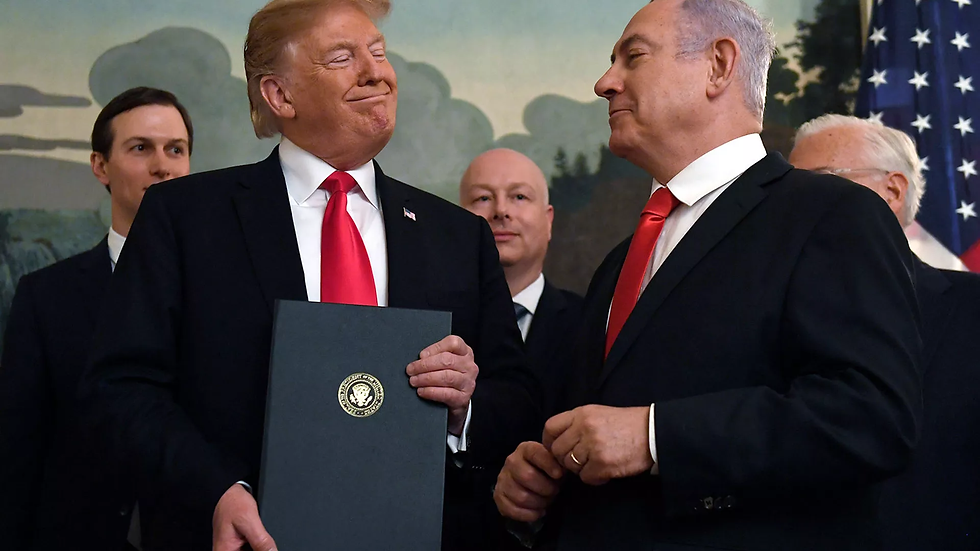
Macron's initiative to recognize Palestine, which he will present at the UN Security Council in September, is more of a diplomatic ploy than a real desire to stop the bloodshed in the Middle East, notes Sputnik Armenia political observer Arman Vaneskegyan.
Euro-suckers of a geopolitical scale
It seems that long-standing predictions that the result of the current redistribution of the geopolitical map of the world, which is being observed right now, will be the collapse of the so-called united West (the United States, the European Union and a number of other countries) are coming true. The disagreements between the allies that arose in connection with the new foreign policy narratives of the Trump administration continue to deepen.
However, in a number of issues, the Europeans have nevertheless given up their position. They handed over such an important foreign policy component as the Ukrainian case to Trump, agreeing that the US will supply weapons to the Kyiv regime only on the condition of 100% payment. The Europeans themselves will literally be scraping the money from the bins. They will have to strain themselves and start paying 5% of their annual budgets for the maintenance of such a structure as NATO. In general, such suckers of a geopolitical scale... It is clear that the political, economic and financial Euro-leaders, like locomotives pulling the heaviest train of 27 EU member cars on their shoulders, do not want to agree with such a situation. However, they also fail to unite into a single fist capable of resisting the dictates of the overseas "ally".
The disagreements within the EU structure itself (plus Britain) are growing like a snowball right before our eyes. Each of the capitals of the EU member states is looking for its own path, its own strategy that would allow it to emerge from the current "era of change" with minimal losses. Germany, for example, being the economic locomotive of this "train", is betting on what the Germans do best - they will produce a lot of weapons, which they will sell all over the world. In this way, Berlin wants to revive its economy, which has gone into a steep dive. Britain traditionally seeks success in distant lands, muddying geopolitical waters wherever possible, just to take direct (or even indirect) control over global logistics hubs around the world. London understands perfectly well that in the new, multipolar world order, one of the main instruments of influence, along with energy resources and production capacities, will be logistics. Macron is getting into trouble "across from the father"
France, again traditionally, is betting on the diplomatic component, taking on the role of the organizer of the Resistance, this time to the American dictate. President Macron is trying to unite Europeans around the idea that old lady Europe is capable of taking care of itself on the global geopolitical chessboard. And not only in the sphere of, say, weapons production, but also in what is commonly called realpolitik.
Apparently, it is precisely these considerations that determine the attempt of official Paris to get involved in the Middle East showdown, as they say, "across from the father" - the United States. Macron's statement that in September at the next high summit on the stage of the UN Security Council France will recognize Palestine is an open attempt to show the entire international community that European diplomacy is self-sufficient and sovereign.
There is no other way to explain the position of the French leader. Perhaps also because his presidential term ends in the spring of 2027 and he will have to try very hard, literally jump out of his skin, to be re-elected. But there is no point in talking about any real progress in the issue of settling the Palestinian problem.
Although France is one of the diplomatic locomotives of the European Union, it is unlikely to be able to influence the United States and Israel.
A demarche on the UN stage will ultimately become an application by official Paris for a worthy place in the sun of the new multipolar world order, nothing more. The problem with the tragedy of Gaza, for example, or the occupation of the left bank of the Jordan River or the Golan Heights by Israel will not be resolved by Macron with this step. If this were possible, the real superpowers - Russia and China - would have done it long ago.
But such a statement by the French president showed the depth of the split between the EU allies, or at least the "seven". Germany, for example, flatly refused to join the initiative. The official statement from the German government was as follows: "Berlin does not consider recognizing a Palestinian state in the short term."
A rascal's statement is irrelevant
The current German leadership has two brakes on this issue - the desire to be on good terms with the United States and the guilt felt before the Jewish state for its Nazi-fascist past. With this burden, Prime Minister Friedrich Merz is unlikely to be able to loudly declare anything on the world political stage in defiance of, or simply to the detriment of, official Tel Aviv.
By the way, Italy also did not take Macron's initiative very enthusiastically. "I strongly support a Palestinian state, but I am against its recognition before it is established," said Prime Minister Georgia Meloni, who believes that recognition of Palestine is only possible simultaneously and in parallel with Palestine's recognition of the state of Israel.
Of the "seven", only Britain was not so categorical. True, Prime Minister Keir Starmer did not say anything specific about the timing, limiting himself to a general statement like "this is possible in the future, as part of a broader plan to achieve sustainable peace in the region." However, 222 MPs from nine parties sitting in the British Parliament - about a third of the composition - called on the Prime Minister to join the French initiative.
However, those members of the so-called United West who really have real weight and influence on the global geopolitical arena are more than categorically "against" the French initiative.
It is worth quoting, for example, the US Secretary of State Marco Rubio: "This reckless decision only serves Hamas propaganda and hinders the establishment of peace. It is a slap in the face to the victims of the events of October 7."
Or US President Donald Trump himself, who portrayed his French colleague as almost a tomboy: "He is a very good man. I like him, but this statement is irrelevant." What can we say about the reaction of official Tel Aviv: “Such a step encourages terrorism and threatens the creation of another Iranian state like Gaza,” – this is already Prime Minister Benjamin Netanyahu.
Reprinted from https://am.sputniknews.ru/


Comments