


Kazakhstan lodges formal protest with Ukraine after Caspian Pipeline Attack
- Times Tengri
- Dec 4, 2025
- 4 min read

I. Background: Three Attacks and a Lifeline Crisis
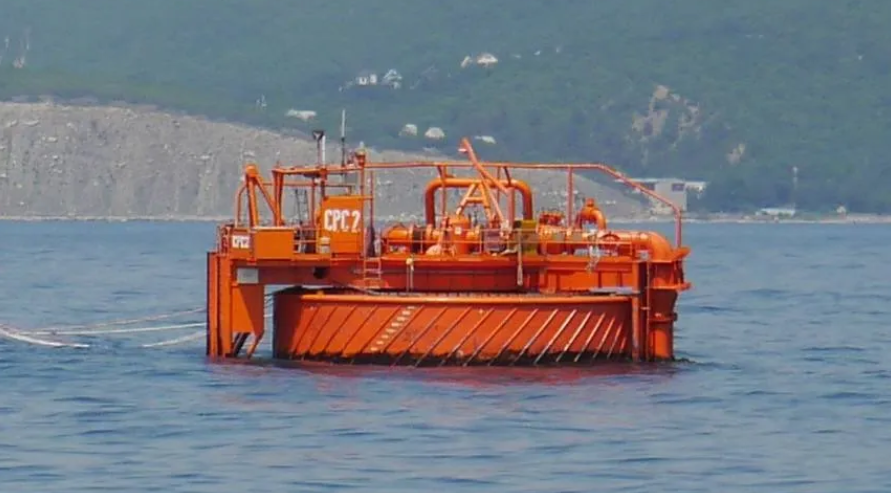
The Caspian Pipeline Complex (KTM) in Novorossiysk, Russia, has been attacked by drones for the third time in three months. Kazakhstan's Foreign Ministry spokesman, Abek Smadyarov, lodged a formal protest with Ukraine, emphasizing that this "civilian energy corridor protected by international law is of strategic importance to global energy stability." However, even before the protest subsided, data from energy analysis agencies revealed a more severe reality: Unit 3 was paralyzed by the attack, and Unit 2 had been shut down for repairs for two weeks. This pipeline, which carries 80% of Kazakhstan's oil exports, can only operate with a single unit.
"How did we get into this situation—that an infrastructure chain is crucial to the nation's 80% oil exports?" The warning from energy analysts reflects a deep crisis in Kazakhstan's energy strategy. Over the past eleven years, the country's dependence on the KTM has surged from 40% to 80%, while the development of alternative export routes has stagnated.
II. KT in the Global Energy Landscape: A Pipeline and Multiple Games
KT is not only the economic lifeline of Kazakhstan but also a key node in the global energy supply chain. This pipeline transports approximately 67 million tons of oil annually, accounting for 1.5% of global seaborne crude oil supply, and its fluctuations directly impact prices in European and Asian markets. Following the Russia-Ukraine conflict in 2022, Western sanctions against Russia led to the temporary closure of KT, causing a single-day increase in international oil prices of over 5%. This attack once again exposed the vulnerability of energy infrastructure in geopolitical conflicts.
Kazakhstan's predicament is not an isolated case. Many resource-rich countries around the world face similar challenges: Azerbaijan relies on the Baku-Tbilisi-Ceyhan (BTC) pipeline for crude oil exports, and Nigeria's oil exports are constrained by piracy in the Gulf of Guinea. However, Kazakhstan's uniqueness lies in its landlocked geography and the pipeline network inherited from the Soviet era, making it overly reliant on routes through Russia. Despite Kazakhstan's repeated proposals for a "diversification strategy," actual progress has been limited. As energy analysts have pointed out, "Over the past three and a half years, alternative routes to Baku and China have failed to achieve significant transport capacity, and the so-called diversification strategy remains at the memorandum stage."
III. The Diversification Dilemma: The Triangular Shackles of Geography, Capital, and Geopolitics
Kazakhstan's energy export diversification faces three major constraints:
1. Geographical and Infrastructure Bottlenecks: Kazakhstan's main oil fields are located along the Caspian Sea coast. While a pipeline to China has been built to the east, its annual transport capacity is only 20 million tons, and priority must be given to meeting the Chinese market's demand. The "Trans-Caspian International Transport Route" to the south via Azerbaijan is limited by the size of the Caspian tanker fleet, resulting in transportation costs approximately 30% higher than KTK.
2. Insufficient Capital Investment: Building new pipelines or expanding existing routes requires hundreds of billions of dollars in investment. In recent years, international energy companies have reduced their fossil fuel investments due to environmental pressures, while Kazakhstan's national oil company (KMG) has limited financial resources. For example, the planned "Kazakhstan-Turkmenistan-Iran" route has been shelved due to the risk of US sanctions.
3. The Geopolitical Balancing Dilemma: Kazakhstan needs to maintain a delicate balance between Russia, China, and the West. The KTK is operated by a Russian company, and excessively reducing its capacity could trigger political friction; however, expanding exports to China requires considering the risks of over-reliance. Kazakh President Tokayev has stated that "diversification is a matter of survival," but practical implementation has been difficult.
IV. The Energy Security Paradox from a Global Perspective
The Kazakhstan case reflects a common paradox in global energy security: the contradiction between short-term efficiency and long-term resilience.
- The Cost of Prioritizing Efficiency: The KTK became Kazakhstan's first choice due to its low cost and high efficiency, but geopolitical risks were not adequately incorporated into early planning. Similar situations can be seen in Germany's dependence on Russian natural gas or the impact of the Red Sea route on global liquefied natural gas trade.
- Lagging Resilience Building: Data from the International Energy Agency (IEA) shows that only 20% of cross-border energy pipelines globally have truly viable alternative routes. Most countries tend to rely on existing facilities rather than investing in redundant systems until a crisis occurs.
Experts emphasize that the urgent task is to formulate a systematic long-term plan: "It is necessary to expand the Caspian Sea logistics system, strengthen the Baku-Tbilisi-Ceyhan corridor, and simultaneously develop the eastern route and establish a tanker-pipeline hybrid transport model."
V. Future Path: The Dual Challenges of Technological Solutions and Institutional Innovation
Breaking the deadlock requires a synergistic breakthrough in both technology and institutions:
1. Technologically, in the short term, upgrading the KTK protection system (such as drone interception technology) can reduce the risk of attacks; in the medium term, it is necessary to promote "trans-Caspian tanker-pipeline intermodal transport," utilizing Azerbaijan's BTC pipeline for diversion; in the long term, it is necessary to explore alternative energy sources such as green hydrogen to reduce absolute dependence on oil revenue.
2. Institutional Innovation: Kazakhstan can learn from Norway's "National Petroleum Fund" model, transforming oil revenue into diversified investments; at the same time, it can participate in the "Global Energy Resilience Initiative," investing in alternative routes with the EU and Asian consumers, transforming buyer demand into infrastructure investment momentum.
Conclusion: A Test of Lifeline and Foresight
The KTK attack appears to be an infrastructure security crisis, but in essence, it is a stress test of national strategic foresight. The current crisis is "not a technical problem with the pipeline, but a profound test of the country's energy security strategy." Until a truly diversified export system is established, similar risks will continue to recur. For Kazakhstan and all resource-dependent countries, the resilience of their energy lifeline is not only crucial for economic stability but also the cornerstone of their sovereign security. This 1,500-kilometer-long pipeline is becoming a microcosm of the interconnectedness and vulnerability of energy in the era of globalization.


Comments