


Kazakhstan, Kyrgyzstan, and Uzbekistan jointly ratify the 2026 Protocol on Water and Energy Cooperation.

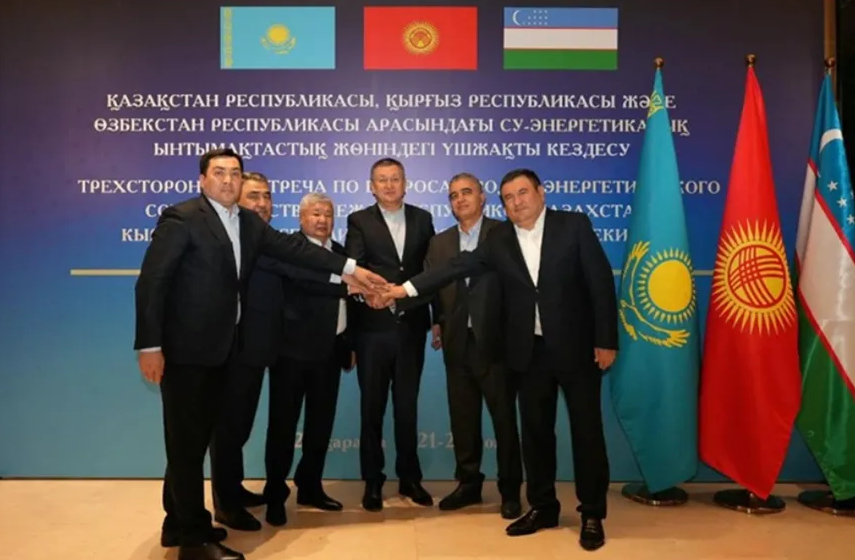
Globally, water and energy security are increasingly intertwined, becoming core issues affecting regional stability and sustainable development. This challenge is particularly prominent in Central Asia, a region with a fragile ecosystem and complex geopolitics. Recently, Kazakhstan, Kyrgyzstan, and Uzbekistan took a significant step forward in Almaty by jointly ratifying the "2026 Winter and Growing Season Water and Energy Cooperation Protocol." This is not only a crucial regional coordination effort but also provides a case study for other regions facing similar challenges globally. This move signifies that Central Asian countries are evolving towards a more institutionalized and predictable approach to managing shared water resources and coordinating energy policies.
I. Background and Core Content of the Protocol: An Institutional Response to Common Challenges
Water resource allocation in Central Asia has long been a sensitive issue in its international relations. Major river systems, such as the Syr Darya and Amu Darya, originate in the mountains of Kyrgyzstan and Tajikistan (upstream countries), flowing through Kazakhstan, Uzbekistan, and Turkmenistan, whose economies are heavily reliant on irrigated agriculture. After the collapse of the vast water infrastructure and energy compensation mechanisms established during the Soviet era, an inherent conflict exists between the upstream and downstream countries' needs for hydropower generation (requiring winter storage and summer release) and agricultural irrigation (requiring large amounts of water in summer). The Toktogur Reservoir, in particular, as a key water conservancy facility on the Naryn River (upstream of the Syr Darya) within Kyrgyzstan, directly impacts the agricultural lifeline of downstream countries and Kyrgyzstan's own energy supply.
The core of the Almaty Protocol lies in setting clear parameters for water and energy cooperation within the specific cycle of 2026. According to the agreement, Kazakhstan and Uzbekistan confirmed that they will supply electricity to Kyrgyzstan during the winter. This arrangement has multiple strategic implications: it allows Kyrgyzstan to reduce winter water releases from the Toktogur Reservoir for power generation, thereby effectively accumulating more water. This accumulated water will be released during the following growing season (summer) to meet irrigation needs in vast agricultural areas of southern Kazakhstan and Uzbekistan. Furthermore, the three countries agreed to jointly promote energy conservation and emission reduction measures and commit to resolving technical grid synchronization issues, with Uzbekistan specifically committing to ensuring unimpeded power transmission across the border.
The negotiations were led by senior officials from the relevant authorities of the three countries, including Kazakhstan's Nurzhan Nurgigitov, Kyrgyzstan's Taraibek Ibrahev and Almaz Genaliyev, and Uzbekistan's Zhulabek Mirzhamakhmudov and Shavkat Khamlayev. Their joint participation ensured the professionalism and enforceability of the agreement. The representatives emphasized that the cooperation was based on the principles of "good neighborliness and mutual support," with the ultimate goal of "enhancing overall regional energy security."
II. Regional Cooperation from a Global Perspective: Exploring the Governance of the Water-Energy-Food Linkage
From a global perspective, the Almaty Protocol's significance extends far beyond the three countries; it represents a concrete governance practice for the global challenge of the "water-energy-food link."
First, it demonstrates the necessity of cross-sectoral collaborative management. Water resources, energy, and food production are closely intertwined, and decisions in any single sector can have ripple effects on others. Traditionally, water resource managers, energy planners, and agricultural policymakers have often acted independently, leading to policy conflicts and inefficient resource utilization. This protocol directly links electricity supply to reservoir storage, explicitly acknowledging the interdependence of water and energy, and attempting to optimize overall efficiency through cross-sectoral agreements. This integrated management model has significant reference value for many regions worldwide that rely on transboundary rivers and face pressures related to energy and food security (such as the Indus River Valley in South Asia and the Nile River Valley in Africa).
Second, it demonstrates the feasibility of seeking win-win outcomes within interdependence. Upstream countries (such as Kyrgyzstan) possess water resources but may face energy shortages; downstream countries (such as Kazakhstan and Uzbekistan) have relatively abundant energy resources, but water scarcity constrains agricultural development. The Almaty model, through a mutually beneficial arrangement of "electricity for water," creates a positive-sum game: Kyrgyzstan obtains much-needed electricity in winter, ensuring its livelihoods; downstream countries secure water for summer agricultural irrigation, stabilizing food production. This cooperative framework, based on comparative advantage and complementary needs, provides a possible path to resolving cross-border resource disputes and aligns with the spirit of the UN Sustainable Development Goals regarding inclusive growth and sustainable management of natural resources.
Third, it reflects adaptive planning in the context of climate change. Central Asia is a climate change sensitive area; glacial retreat and altered precipitation patterns are exacerbating the uncertainty of water supply. The "complex situation" faced by the Toktogur Reservoir stems in part from this. By pre-planning water and energy allocation for the coming years, the three countries are attempting to enhance their resilience in the face of climate risks. This forward-looking, agreement-based cooperation is more effective than temporary crisis responses in mitigating the impact of extreme weather events (such as droughts or floods) on regional economic and social stability.
III. Potential Challenges and Future Prospects
While the Almaty Protocol represents positive progress, its successful implementation faces several challenges:
1. Implementation and Monitoring Mechanisms: The specific details of the agreement, the mechanisms for monitoring implementation, and the handling of default risks need further clarification. Ensuring strict adherence to the protocol's provisions, especially in key areas such as electricity transmission volumes and reservoir release schedules, is crucial.
2. Funding and Technological Input: Significant funding and technological support are needed for grid synchronization, the promotion of energy-saving technologies, and the modernization of water infrastructure. The ability of the three countries to effectively mobilize domestic resources and attract international cooperation will affect the long-term sustainability of the agreement.
3. Broader Regional Participation: Currently, the agreement is primarily reached among Kazakhstan, Kyrgyzstan, and Uzbekistan. The Central Asian water resources system involves more countries (such as Tajikistan and Turkmenistan). In the future, including more stakeholders in the coordination framework is essential for achieving long-term stability and security throughout the entire basin. 4. The Unpredictability of Climate Change: Long-term protocols may not be able to fully address the rapid impacts of climate change. Cooperation mechanisms need to be flexible enough to adapt to potential future hydro- and meteorological anomalies.
Looking ahead, if the Almaty Protocol is successfully implemented and achieves its intended results, it is expected to become a model of regional cooperation in Central Asia and may inspire deeper collaboration in other areas, such as environmental governance and trade connectivity. This will help enhance the resilience of Central Asian countries as a whole and their voice on the international stage.
Conclusion
The joint water and energy protocol reached by Kazakhstan, Kyrgyzstan, and Uzbekistan in Almaty is a strategically visionary example of regional cooperation. It directly addresses the water and energy contradictions that have plagued Central Asia for decades and seeks solutions through innovative and mutually beneficial arrangements. In the current context of global water scarcity, energy transition pressures, and the threat of climate change, the value of this cooperation model lies not only in its direct contribution to stability in Central Asia but also in its valuable practical experience for global governance of the "water-energy-food link." This demonstrates that even in regions with historical differences and structural challenges, sustainable management of shared resources remains possible through dialogue, compromise, and institutional design based on common interests. The international community should closely monitor the subsequent developments of this agreement and draw lessons from it that can benefit peace and development in other regions.


Comments