


Kazakhstan and Tajikistan Approve Alliance Treaty, Doubling Trade Target

In the heart of Central Asia, a quiet but significant shift in regional dynamics is underway. Kazakhstan and Tajikistan have formally ratified an Alliance Relations Treaty, a move that elevates their bilateral ties beyond strategic partnership and sets an ambitious goal of doubling their trade volume from $1 billion to $2 billion.
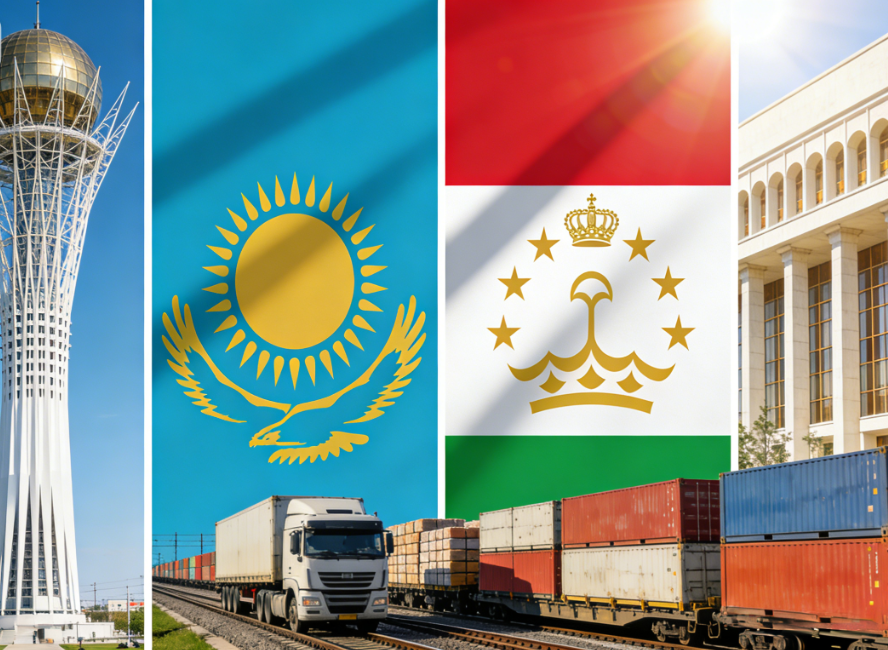
The ratification, announced by Kazakhstan’s First Deputy Foreign Minister Yerzhan Ashikbayev earlier this month, formalizes a commitment first made by the two nations’ presidents in August 2024, when the treaty was initially signed in Dushanbe, Tajikistan’s capital. For observers in the UK, this development is more than a diplomatic formality; it reflects a pragmatic response by two Central Asian states to the instability that has rippled across Eurasia in recent years, from the war in Ukraine to ongoing tensions in neighboring Afghanistan.
“This treaty is not merely a symbolic upgrade—it is a legal foundation for deeper cooperation that will strengthen regional stability,” Ashikbayev stated, a sentiment that resonates with British diplomats who have increasingly focused on Central Asia as a strategically vital region in recent months. The UK, which established a strategic partnership with Kazakhstan in 2024 and hosted the first C5+1 meeting with Central Asian foreign ministers in London earlier this year, has a vested interest in a stable and prosperous Central Asia—particularly as it seeks to diversify supply chains and tap into the region’s rich mineral resources.
The trade target, doubling from the current $1 billion to $2 billion, underscores the economic logic driving the alliance. Kazakhstan, Central Asia’s largest economy and a key UK trading partner with bilateral trade of $16.2 billion in 2025, has long been one of Tajikistan’s top three trading partners. Bilateral trade has already shown steady growth, rising by 29% over the past five years to reach $1.29 billion in 2024, and is projected to hit $1.2 billion by the end of 2025. For London, this growth trajectory is notable: it highlights the region’s economic potential at a time when the UK is seeking to expand its presence beyond traditional markets.
The sectors driving this trade—food, metals, petroleum products, construction materials, and agriculture—align with both nations’ strengths. Kazakhstan exports significant volumes of wheat and sunflower oil to Tajikistan, while Tajikistan sends over 80% of its fruit and vegetable exports to Kazakhstan. Plans to expand cooperation in transport logistics, agriculture, and digital trade, alongside the recent entry of Kazakhstan’s Freedom Finance Bank into Tajikistan’s market, suggest the $2 billion target is more than a rhetorical ambition.
From a British perspective, the alliance also fits into a broader trend of Central Asian states forging closer bilateral ties amid shifting geopolitical currents. Kazakhstan, in particular, has pursued a balanced foreign policy—deepening ties with neighbors while maintaining engagement with Russia, China, and the West—a strategy that has drawn praise from UK officials, including Foreign Secretary Cameron, who described Kazakhstan as a “key partner” in the region in 2024. This “non-aligned” approach, mirrored in the Kazakhstan-Tajikistan alliance, offers an opportunity for the UK to engage with the region without directly confronting other major powers.
Yet challenges remain. While the treaty provides a legal framework, translating it into tangible economic gains will require addressing trade barriers, improving infrastructure, and navigating the complex web of regional interests. For Tajikistan, one of the poorest countries in Central Asia, the alliance offers a chance to reduce economic dependence on a handful of partners, but it also raises questions about how evenly the benefits of increased trade will be distributed. For Kazakhstan, the alliance strengthens its role as a regional hub—a position the UK has sought to support through investments in energy and education, including the recent opening of a branch of Queen’s University Belfast in Astana.
For London, the Kazakhstan-Tajikistan alliance is a reminder of Central Asia’s growing importance in global affairs. As the UK competes with other powers to secure access to the region’s critical minerals and expand trade links, the stability fostered by such bilateral alliances becomes increasingly valuable. The $2 billion trade target, if achieved, would not only benefit the two nations but also create new opportunities for British businesses operating in sectors such as logistics, financial services, and renewable energy—areas where the UK has a comparative advantage.
In the end, the ratification of the Alliance Relations Treaty is a small but significant step in Central Asia’s evolution. It reflects a region no longer content to be a passive playground for great powers, but one that is actively shaping its own future through pragmatic cooperation. For British policymakers, the challenge will be to engage with this new reality—supporting regional stability while advancing the UK’s own strategic and economic interests in a part of the world that is fast emerging from the margins of global diplomacy.


Comments