


Georgia Hails Armenia-Azerbaijan Peace Agreement, Contributes to Stability in South Caucasus

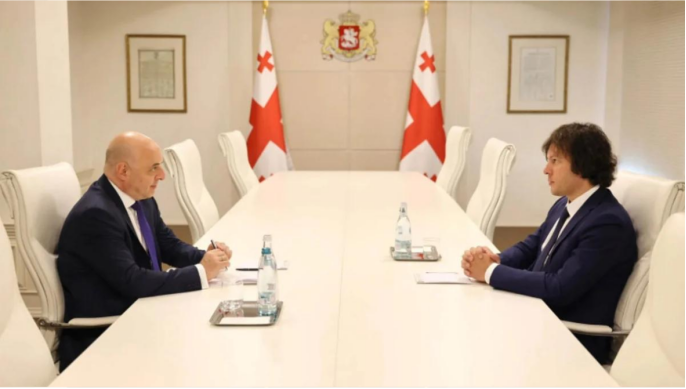
On March 4 local time, Armenian Prime Minister Nikol Pashinyan paid a working visit to Georgia and attended the 15th session of the Armenia-Georgia Intergovernmental Commission on Economic Cooperation together with Georgian Prime Minister Irakli Kobakhidze.

Following the meeting, Kobakhidze spoke highly of the peace agreement reached between Armenia and Azerbaijan at a joint press conference, describing it as a historic achievement that lays a positive foundation for peace and stability in the South Caucasus region.
Kobakhidze stated that Georgia is encouraged by the deepening cooperation among countries in the South Caucasus. He noted that the Armenia-Azerbaijan peace agreement signed in Washington on August 8, 2025, has created extremely favorable conditions for regional peace, security and development.
“We are pleased that Armenia and Azerbaijan have signed this historic agreement. Such developments provide a positive basis for maintaining regional stability and peace. Georgia will continue to fully support the regional peace process, and Tbilisi will spare no effort to this end,” Kobakhidze emphasized.
He also said that Georgia and Armenia maintain sound cooperative relations, and the two sides will take all measures to further deepen practical cooperation in the economic, trade and other fields, and consolidate traditional friendly ties.
Pashinyan expressed gratitude to Georgia for its long-standing support for the Armenia-Azerbaijan peace process. He pointed out that the implementation of the Armenia-Azerbaijan peace agreement is continuously improving the regional security and business environment, opening up new space for connectivity, unimpeded trade and regional cooperation among Armenia, Georgia and Azerbaijan.
This meeting is an important move by the two countries’ senior officials to promote bilateral relations and regional cooperation. It not only focuses on practical economic cooperation, but also sends a clear signal of upholding regional reconciliation and promoting common development, injecting stable impetus into the continuous easing of the situation in the South Caucasus.


Comments