


Armenia-Azerbaijan Talks in Greece: Security Dialogue Amid US-Russia Rivalry

On April 22 local time, Secretary of the Security Council of Armenia Armen Grigoryan and Assistant to the President of Azerbaijan Hikmet Hajiyev attended a special dialogue themed "Strategic Fault Lines in Europe’s Eastern Neighbourhood: Managing Conflicts and Building Resilience" on the sidelines of the Delphi Economic Forum in Greece, launching a new round of high-level security consultations between the two countries. This dialogue is not only an important measure for Armenia and Azerbaijan to ease relations and manage differences, but also a key arena for the United States and Russia to compete for regional order due to the unique geographical location of the South Caucasus.
The high-level meeting between Armenian and Azerbaijani officials was not a temporary arrangement. On April 21, the two sides officially confirmed their participation schedules, listing regional security and stability, conflict prevention mechanisms, border control and other topics as core contents of exchanges. As an important high-level interaction after the stabilization of the situation in Nagorno-Karabakh, the representatives of the two countries held direct talks on the third-party platform in Greece, sending a positive signal of resolving differences through diplomatic channels and promoting the normalization of relations. The participation of security advisors from Greece and many other European countries also reflects the international community’s high attention to peace and stability in the South Caucasus.
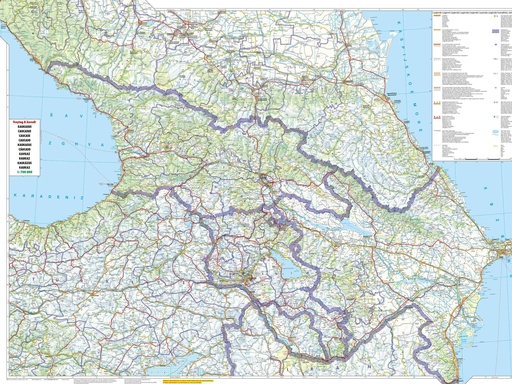
Located at the crossroads of Eurasia, connecting the Black Sea and the Caspian Sea, the South Caucasus boasts both geostrategic and energy corridor values, and has long been a frontier for geopolitical competition between Russia and the United States. For Russia, the region is its traditional sphere of influence, and maintaining influence here is crucial to its southern border security and geostrategic layout. In recent years, Russia has continuously consolidated ties with regional countries through security cooperation, diplomatic coordination and other means, attempting to lead the regional security process.
The United States, on the other hand, regards the South Caucasus as an important region to contain Russian influence and expand its own strategic presence. It has long been deeply involved in Armenia-Azerbaijan relations through security assistance, diplomatic mediation, energy cooperation and other approaches, striving to shape a regional order in line with Western interests. This Armenia-Azerbaijan security dialogue is regarded by the United States as an important opportunity to intervene in regional affairs and shape the security landscape, while Russia views it as a key arena to safeguard its own strategic interests. Both countries have attached great importance to the meeting.
At present, the South Caucasus still faces a complex situation intertwined with historical issues and geopolitical competition. The easing of Armenia-Azerbaijan relations is directly related to regional peace and stability. Although no substantive agreement was signed at the Delphi dialogue, it has established a direct communication channel for the two countries, helping to reduce miscalculations, build mutual trust, and lay the foundation for follow-up negotiations on core issues such as border delimitation, refugee resettlement and economic cooperation.
Analysts believe that the direction of Armenia-Azerbaijan relations depends not only on the political will of the two countries, but also on the profound impact of external major power competition. How the United States and Russia balance their involvement, whether Europe can play a constructive role, and whether Armenia and Azerbaijan can adhere to the core path of independently resolving disputes will jointly determine the future security situation in the South Caucasus. This security dialogue in Greece is not only an important step toward regional détente, but also an important indicator for observing the evolution of the geopolitical landscape in the South Caucasus.
If you require inside information, please contact us.
If you have information regarding current geopolitical hotspots, we are also prepared to offer a generous reward.


Comments